BLOG
Oncology Manufacturing Plants in India
Oncology Manufacturing Plants in India – Medizia Biotech Perspective
Cancer remains one of the most challenging diseases confronting global healthcare systems. As the incidence of cancer continues to rise, access to safe, effective, and affordable oncology medicines becomes increasingly critical. In this context, oncology manufacturing plants in India have gained prominence as an essential part of the global pharmaceutical supply chain. India’s advanced manufacturing infrastructure, regulatory compliance, and cost-efficient production capabilities make it a trusted destination for oncology drug production. At Medizia Biotech, we understand the significance of these plants not only for India’s healthcare ecosystem but also for patients and partners across the world.
The Rising Demand for Oncology Medicines
The global oncology market has witnessed exponential growth over the past decade, driven by increased cancer prevalence, early detection technologies, and expanding treatment options. Countries across the world are seeking reliable sources for oncology medicines — ranging from traditional chemotherapy agents to advanced targeted therapies and biologics.
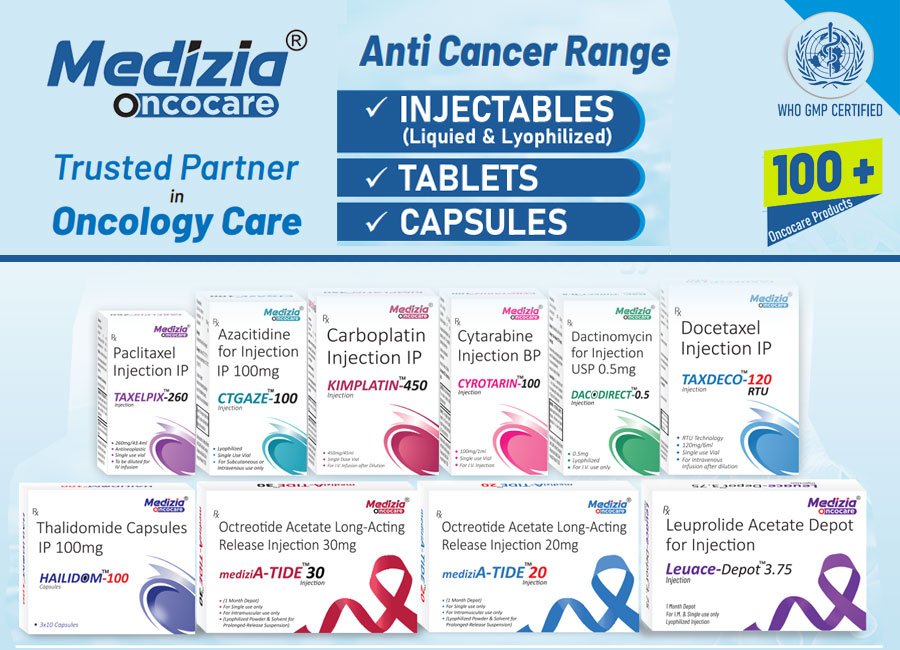
Oncology manufacturing plants in India stand out due to their ability to produce a wide spectrum of cancer medicines, including sterile injectable formulations, oral tablets and capsules, hormone-based therapies, and supportive care medications. These facilities are designed to adhere to stringent quality standards, ensuring that patients receive medications that are both safe and effective.
Specialized Infrastructure for Potent Oncology Drugs
Manufacturing oncology formulations is significantly more complex than producing general pharmaceutical products. Oncology drugs often contain highly potent and cytotoxic compounds that require specialized handling and containment systems. This is where Indian manufacturing plants have made substantial investments in cutting-edge infrastructure.
Modern oncology manufacturing plants in India are equipped with advanced containment technologies such as:
- Isolators and restricted access barrier systems (RABS)
- Negative pressure production suites
- HEPA-filtered cleanrooms
- Automated handling and transfer systems
These technologies play a vital role in ensuring operator safety, maintaining drug purity, and preventing cross-contamination. Given that even minimal exposure to cytotoxic compounds can pose health risks, such infrastructure is indispensable.
Additionally, these plants employ rigorous environmental monitoring systems and multi-tier Quality Assurance protocols that align with global best practices.
Regulatory Compliance and Quality Standards
Oncology manufacturing plants in India must adhere to strict regulatory frameworks to ensure that the products meet international quality requirements. The Central Drugs Standard Control Organization (CDSCO) supervises the regulatory landscape in India, enforcing compliance with national Good Manufacturing Practices (GMP).
Many Indian oncology facilities have also received certifications and approvals from global regulatory agencies such as the United States Food and Drug Administration (USFDA), European Medicines Agency (EMA), and the UK’s Medicines and Healthcare products Regulatory Agency (MHRA). These approvals enable Indian oncology medicines to be exported to regulated markets with confidence.
High-quality standards are maintained throughout the production cycle — from raw material procurement and analytical testing to packaging and stability studies. Robust documentation practices and batch traceability further enhance transparency and reliability.
Key Players and Dedicated Oncology Plants
India’s oncology manufacturing landscape includes both established multinational pharmaceutical companies and specialized manufacturing organizations. Companies like Sun Pharmaceutical Industries Ltd., Dr. Reddy’s Laboratories, and Cipla Ltd. operate oncology facilities with global reach, producing a wide range of formulations that are distributed across several continents.
In addition to large pharmaceutical corporations, independent and contract manufacturing organizations focus exclusively on oncology production. These facilities often support third-party and contract manufacturing services, helping international pharma companies scale production without the need for in-house infrastructure.
This diversity in manufacturing support allows for flexibility in production capacity, faster turnaround times, and customized production solutions to meet varying market demands.
Cost-Efficiency: India’s Competitive Edge
One of the most significant advantages of oncology manufacturing plants in India is their cost-effectiveness. India benefits from a strong network of suppliers, affordable skilled manpower, and well-established logistics infrastructure. These factors collectively lower the cost of production while maintaining high-quality outputs.
The cost advantage translates into more affordable oncology medicines for patients and healthcare systems worldwide. Many low- and middle-income countries rely heavily on Indian-made oncology drugs due to their reliability and accessibility.
Furthermore, India’s ability to manufacture generic versions of expensive cancer drugs — once their patents expire — has dramatically reduced treatment costs, making life-saving medications more reachable to patients who need them the most.
The Role of Biotech and Advanced Oncology Production
With advancements in cancer treatment, the demand for biologics, biosimilars, and targeted therapies is on the rise. Oncology manufacturing plants in India are therefore upgrading their capabilities to include biotechnology platforms, cell culture facilities, and bioreactor systems.
Biologics and biosimilars require a different set of manufacturing techniques compared to traditional small-molecule drugs. These include sophisticated upstream and downstream processing, stringent quality controls, and specialized analytical systems. Indian biotech-focused facilities are increasingly meeting these requirements, thereby expanding India’s footprint in cutting-edge oncology treatments.
Export Growth and Global Partnerships
India’s oncology manufacturing plants are not just serving local needs — they are integral to global healthcare. Indian oncology medicines are exported to North America, Europe, Asia, Africa, and Latin America. Regulatory approvals from stringent authorities such as USFDA and EMA enhance the credibility of Indian-manufactured oncology drugs.
Collaboration between Indian manufacturers and multinational pharmaceutical companies through technology transfer, co-development, and contract manufacturing agreements has further strengthened India’s position as a key global supplier.
These partnerships facilitate knowledge exchange, improve manufacturing standards, and expand market access — ultimately benefiting patients worldwide.
Challenges and Future Outlook
While oncology manufacturing plants in India have achieved commendable progress, challenges remain. The high cost of setting up and maintaining advanced containment infrastructure, evolving regulatory landscapes, and competition from other emerging markets demand continuous innovation and investment.
However, India’s commitment to pharmaceutical excellence, combined with ongoing support for research and development, ensures positive future growth. With cancer research advancements, personalized medicine, and an expanding biosimilars market, Indian oncology manufacturing plants are poised for sustained expansion.
Types of Oncology Manufacturing Plants in India
Oncology manufacturing plants in India are designed to produce a wide range of cancer treatment medications while maintaining strict quality and safety standards. Depending on the product category, manufacturing facilities may specialize in sterile injectables, oral solid dosage forms, capsules, tablets, or specialty oncology formulations. Advanced oncology plants are equipped with dedicated production areas to prevent cross-contamination and ensure product integrity throughout the manufacturing process.
Some facilities focus on chemotherapy medicines, while others manufacture targeted therapies, hormonal treatments, and supportive care products used in oncology treatment protocols. Modern manufacturing infrastructure enables pharmaceutical companies to meet both domestic and international demand efficiently.
Quality Standards in Oncology Manufacturing
Quality plays a critical role in oncology pharmaceutical manufacturing due to the sensitive nature of cancer treatment medications. Reputable oncology manufacturing plants follow comprehensive quality control procedures throughout the production cycle.
Key quality measures include:
-
Raw material testing and verification
-
In-process quality monitoring
-
Product stability testing
-
Batch documentation and traceability
-
Microbiological testing where applicable
-
Packaging and labeling compliance
Maintaining consistent quality standards helps ensure product safety, effectiveness, and regulatory compliance.
WHO-GMP Compliance in Oncology Facilities
WHO-GMP compliance is one of the most important requirements for oncology manufacturing facilities. These guidelines help manufacturers maintain standardized production practices and quality management systems.
A WHO-GMP compliant oncology manufacturing plant typically follows:
-
Controlled manufacturing environments
-
Documented quality management procedures
-
Equipment validation and maintenance
-
Employee training programs
-
Product testing and quality assurance protocols
-
Regulatory compliance requirements
Pharmaceutical companies often prefer manufacturing partners that operate according to WHO-GMP standards because it reflects a commitment to quality, safety, and reliability.
Related Oncology Manufacturing Resources
Companies exploring oncology manufacturing opportunities may also benefit from learning about Anticancer Drugs Manufacturers in India, selecting a reliable Oncology Medicine Manufacturer in India, understanding Third Party Oncology Manufacturing solutions, and reviewing the company profile through the About Us section to evaluate manufacturing capabilities and industry experience.
Conclusion
Oncology manufacturing plants in India form a vital link in the global fight against cancer. These facilities combine rigorous quality standards, advanced technology, skilled professionals, and cost-effective production to deliver high-quality oncology medicines worldwide. From traditional chemotherapy formulations to advanced biologics, Indian plants are equipped to meet the evolving needs of cancer care.
At Medizia Biotech, we recognize the strategic importance of these manufacturing hubs and their contribution to global healthcare. As demand for oncology drugs continues to rise, Indian manufacturing plants will remain at the forefront, ensuring that safe, affordable, and effective cancer treatments reach patients everywhere.
Frequently Asked Questions
What is an oncology manufacturing plant?
An oncology manufacturing plant is a pharmaceutical production facility dedicated to manufacturing medicines used in cancer treatment and supportive oncology care.
Why are specialized facilities required for oncology medicines?
Specialized facilities help maintain product quality, prevent cross-contamination, and ensure compliance with industry regulations and safety standards.
What certifications should an oncology manufacturing facility have?
Reliable facilities generally operate in compliance with WHO-GMP guidelines and applicable regulatory requirements to ensure quality and consistency.
Does India have advanced oncology manufacturing infrastructure?
India has developed a strong pharmaceutical manufacturing ecosystem with modern facilities capable of producing a broad range of oncology medicines.
How can pharmaceutical companies benefit from oncology contract manufacturing?
Contract manufacturing enables businesses to expand product offerings, reduce infrastructure costs, access manufacturing expertise, and scale production efficiently.