BLOG
Oncology Medicine Manufacturer in India
Oncology Medicine Manufacturer in India
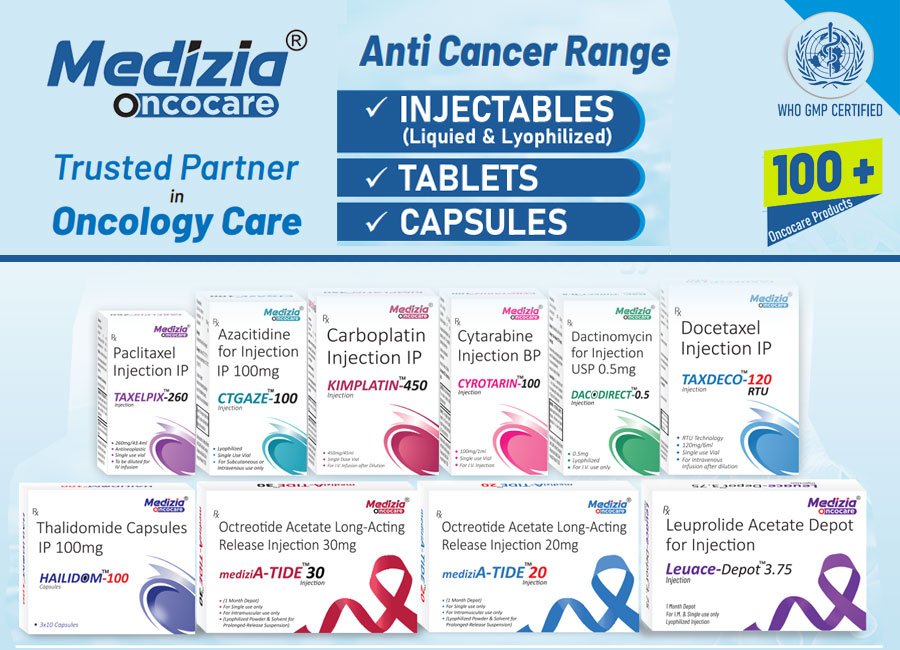
Medizia Biotech is a leading Oncology Medicine Manufacturer in India, offering a wide range of high-quality oncology medicines for cancer treatment. With advanced manufacturing facilities, stringent quality control systems, and compliance with international standards, Medizia Biotech is committed to delivering safe, effective, and affordable oncology formulations. As a trusted Oncology Medicine Manufacturer in India, the company focuses on innovation, regulatory compliance, and meeting the growing demand for cancer care solutions in domestic and international markets.
Why Choose Medizia Biotech as an Oncology Medicine Manufacturer in India
Selecting the right oncology medicine manufacturer is critical for ensuring the quality, safety, and effectiveness of cancer treatment solutions. Medizia Biotech has established itself as a trusted Oncology Medicine Manufacturer in India by focusing on quality-driven manufacturing practices, regulatory compliance, and continuous product development.
The company is committed to producing oncology medicines that meet stringent quality standards and support the growing demand for reliable cancer treatment options. Every stage of the manufacturing process is carefully monitored, from raw material procurement to formulation development, quality testing, packaging, and final distribution.
One of the key strengths of Medizia Biotech is its emphasis on quality assurance. The company follows well-defined manufacturing procedures and quality control protocols designed to maintain product consistency and safety. This commitment helps healthcare providers and business partners gain confidence in the products they source from the company.
Medizia Biotech also focuses on innovation and operational excellence. The pharmaceutical industry continues to evolve rapidly, especially in the oncology segment where treatment approaches and therapeutic requirements frequently change. By staying aligned with industry developments and market needs, the company strives to provide oncology medicines that support modern healthcare requirements.
In addition to manufacturing capabilities, Medizia Biotech offers reliable business support for distributors, pharmaceutical companies, and healthcare organizations seeking dependable oncology medicine manufacturing solutions. The company's customer-centric approach, commitment to quality, and dedication to long-term partnerships make it a preferred choice for oncology medicine manufacturing in India.
With a strong focus on quality, compliance, and customer satisfaction, Medizia Biotech continues to strengthen its position as a trusted Oncology Medicine Manufacturer in India serving domestic and international pharmaceutical markets.
Regulatory Compliance and Quality Standards
Quality and regulatory compliance are central to the credibility of Indian oncology medicines. The Central Drugs Standard Control Organization (CDSCO) plays a key role in monitoring and regulating pharmaceutical manufacturing in India. Oncology medicine manufacturers must comply with Good Manufacturing Practices (GMP) and adhere to strict quality control measures.
Many Indian facilities have also gained approvals from international regulatory authorities such as the United States FDA (USFDA), European Medicines Agency (EMA), and Medicines and Healthcare products Regulatory Agency (MHRA) — reflecting their capability to meet global quality expectations. These certifications enable Indian oncology medicines to be exported to regulated markets across North America, Europe, Asia, Africa, and Latin America.
India’s Emerging Leadership in Oncology Drug Manufacturing
India holds a distinguished position in the global pharmaceutical industry, often referred to as the “pharmacy of the world.” While India has historically been known for its strength in producing generic medications for a range of therapeutic areas, the country’s capabilities in oncology medicine manufacturing have expanded considerably over the past decade. Indian manufacturers now produce a wide spectrum of cancer drugs, including chemotherapy agents, targeted therapies, hormonal treatments, immunotherapies, and supportive care medicines.
This growth has been driven by multiple factors — advanced infrastructure, robust regulatory frameworks, skilled scientific talent, and a cost-efficient manufacturing ecosystem. Together, these strengths empower Indian oncology medicine manufacturers to produce high-quality formulations that compete on the global stage.
Oncology Medicine Manufacturing Capabilities
As a dedicated Oncology Medicine Manufacturer in India, Medizia Biotech focuses on delivering high-quality pharmaceutical solutions that support the growing needs of cancer treatment. The company is committed to maintaining manufacturing excellence through systematic production processes, quality assurance measures, and adherence to industry standards.
The oncology segment requires a high level of precision, consistency, and regulatory compliance. Medizia Biotech follows structured manufacturing protocols to ensure that every product is developed and produced with attention to quality and patient safety. From formulation development to final packaging, each stage undergoes thorough monitoring and quality evaluation.
The company continuously works towards strengthening its manufacturing capabilities to support a broad range of oncology formulations. By adopting modern manufacturing practices and quality-focused procedures, Medizia Biotech aims to provide reliable oncology medicines that meet the expectations of healthcare professionals, distributors, and pharmaceutical partners.
Quality control remains a critical aspect of the manufacturing process. Raw materials, production stages, and finished products are evaluated through established quality procedures to ensure consistency and compliance. This approach helps maintain product reliability while supporting long-term business partnerships.
In addition to manufacturing excellence, Medizia Biotech emphasizes timely production, efficient supply chain management, and customer satisfaction. The company's commitment to operational efficiency enables it to serve pharmaceutical businesses seeking dependable oncology medicine manufacturing solutions in India.
Through continuous improvement, quality-focused operations, and a commitment to pharmaceutical innovation, Medizia Biotech continues to expand its capabilities as a trusted Oncology Medicine Manufacturer in India.
Oncology Third Party Manufacturing Services
The demand for high-quality oncology medicines continues to grow as healthcare providers and pharmaceutical companies seek reliable manufacturing partners. Medizia Biotech offers professional oncology third party manufacturing services designed to support businesses looking to expand their oncology product portfolio without investing in their own manufacturing infrastructure.
Third party manufacturing provides pharmaceutical companies with an efficient and cost-effective way to introduce oncology medicines to the market. By partnering with an experienced manufacturer, businesses can focus on marketing, distribution, and brand development while ensuring that product quality remains a top priority.
Medizia Biotech follows quality-oriented manufacturing practices and established production procedures to support third party manufacturing requirements. The company works closely with its business partners to understand their specifications and deliver solutions aligned with industry standards and market expectations.
A key advantage of third party manufacturing is scalability. Pharmaceutical companies can expand their oncology product offerings while optimizing operational costs and reducing production-related challenges. This flexibility enables businesses to respond more effectively to changing market demands and healthcare requirements.
The company also emphasizes transparency, quality assurance, and long-term business relationships. Every manufacturing project is handled with a commitment to consistency, regulatory compliance, and customer satisfaction. Through efficient production planning and quality-focused operations, Medizia Biotech aims to deliver dependable manufacturing support for oncology medicine brands.
With a strong focus on quality, reliability, and partnership-driven growth, Medizia Biotech continues to support pharmaceutical companies seeking trusted oncology third party manufacturing services in India.
Understanding the Complexity of Oncology Medicine Manufacturing
Manufacturing oncology medicines is inherently more complex than producing standard pharmaceuticals. Oncology drugs frequently involve highly potent active pharmaceutical ingredients (APIs) that can be cytotoxic — meaning they are toxic to cells. Handling and processing these substances require specialized containment systems, cleanroom environments, and strict adherence to safety protocols to protect both workers and end consumers.
To meet these challenges, oncology medicine manufacturers in India have invested significantly in state-of-the-art production facilities equipped with advanced technologies such as negative-pressure environments, isolator systems, high-efficiency particulate air (HEPA) filtration, and automated handling systems. These technologies minimize contamination risk and ensure precision in every batch.
Broad Range of Oncology Products
An oncology medicine manufacturer in India typically produces a diverse portfolio of products that span multiple cancer treatment classes. These include:
- Cytotoxic chemotherapy drugs for first-line and combination therapies
- Targeted therapy medicines that focus on specific molecular pathways
- Hormonal oncology treatments are used in cancers like breast and prostate cancer
- Immunotherapy agents that stimulate the immune system
- Supportive care drugs that manage side effects such as nausea, pain, and infections
Indian manufacturers excel not only in producing established chemotherapy agents but also in formulating complex oral and injectable targeted therapies and hormone-based medications. This diversity enables clinicians to tailor treatment plans more effectively.
Cost-Effective Production and Accessibility
One of the most impactful advantages of oncology medicine manufacturing in India is cost efficiency. India’s robust supplier ecosystem, lower labor costs, and efficient manufacturing processes make it possible to produce oncology drugs at a fraction of the cost compared to many Western nations. As a result, Indian manufacturers have made significant strides in reducing the financial burden of cancer treatment.
Generic versions of expensive patented oncology drugs, once patent protection expires, are produced at scale in India. These generic alternatives provide equivalent therapeutic outcomes at significantly lower prices, making advanced cancer treatment accessible to more patients worldwide — especially in low- and middle-income countries.
Research, Innovation, and the Future of Oncology Medicines
The future of oncology treatment lies not only in traditional chemotherapy but also in precision medicine, targeted therapies, and biologics. Recognizing this shift, oncology medicine manufacturers in India are investing heavily in research and development (R&D) and biotechnology.
Biosimilars — biologic drugs that closely mimic original biologic therapies — are gaining traction as cost-effective alternatives to expensive cancer biologics. Manufacturing biosimilars requires sophisticated technology and stringent quality assurance. Indian companies are increasingly entering this space, expanding their expertise and enhancing global competitiveness.
Collaboration with international pharmaceutical companies through technology transfer and joint research initiatives further accelerates innovation. These strategic partnerships help Indian manufacturers stay on the cutting edge of oncology drug development.
Export Reach and Global Impact
The global reach of Indian oncology medicine manufacturers continues to grow. Indian oncology medicines are exported to more than 100 countries, reaching diverse healthcare markets across continents. This widespread distribution highlights the trust that international healthcare systems place in Indian manufacturing standards.
With regulatory approvals from global authorities, Indian oncology manufacturers have opened doors to highly regulated markets such as the United States and the European Union. These achievements reflect not only quality excellence but also India’s capability to meet complex regulatory requirements.
Challenges and Opportunities
Despite remarkable progress, oncology medicine manufacturing in India faces certain challenges. These include the high cost of setting up advanced manufacturing facilities, intense regulatory scrutiny, and competition from other emerging pharmaceutical markets. Additionally, the development of novel therapies demands continuous investment in R&D and technological upgrades.
However, these challenges also present opportunities for growth and innovation. With increasing global investment in cancer research, the demand for advanced oncology medicines is expected to rise exponentially. India’s manufacturing ecosystem, backed by skilled talent and robust infrastructure, is well-positioned to meet this demand.
Conclusion
As an oncology medicine manufacturer in India, the nation continues to play a transformative role in shaping global cancer care. Through advanced manufacturing practices, strong regulatory compliance, diverse product portfolios, and cost-effective solutions, Indian manufacturers are setting new standards in oncology drug production.
At Medizia Biotech, we recognize the importance of India’s contribution to oncology medicine manufacturing — not just as a supplier, but as an innovator that enhances accessibility, affordability, and patient outcomes worldwide. With ongoing advancements and global collaborations, Indian oncology manufacturers are poised to make an even greater impact in the fight against cancer in the years to come.
Frequently Asked Questions
1. What does an Oncology Medicine Manufacturer in India do?
An oncology medicine manufacturer develops and produces pharmaceutical formulations used in the treatment and management of various types of cancer.
2. Why is India a preferred destination for oncology medicine manufacturing?
India offers advanced pharmaceutical infrastructure, skilled professionals, quality-focused manufacturing practices, and cost-effective production capabilities.
3. What types of oncology medicines are manufactured in India?
Indian manufacturers produce chemotherapy medicines, hormonal therapies, targeted therapies, supportive care products, and various oncology formulations.
4. How does Medizia Biotech maintain product quality?
Medizia Biotech follows quality assurance procedures, manufacturing controls, and product testing processes to maintain consistency and reliability.
5. Does Medizia Biotech provide oncology third party manufacturing services?
Yes, Medizia Biotech offers oncology third party manufacturing solutions for pharmaceutical companies and healthcare businesses.
6. What factors should be considered when choosing an oncology medicine manufacturer?
Key considerations include manufacturing quality, compliance standards, product portfolio, operational capabilities, and business support services.
7. What is the importance of quality assurance in oncology medicine manufacturing?
Quality assurance helps maintain product consistency, safety, reliability, and compliance throughout the manufacturing process.
8. Can pharmaceutical companies outsource oncology medicine manufacturing?
Yes, many pharmaceutical companies partner with experienced manufacturers to expand their oncology product portfolio efficiently.
9. Why choose Medizia Biotech as an Oncology Medicine Manufacturer in India?
Medizia Biotech focuses on quality, compliance, manufacturing excellence, and customer satisfaction while supporting diverse oncology medicine requirements.
10. How can businesses partner with Medizia Biotech for oncology medicine manufacturing?
Businesses can connect with Medizia Biotech to discuss manufacturing requirements, product development opportunities, and long-term pharmaceutical partnerships.